Weekend escape to Luang Prabang

After all those months in the South, it was time for me to head north and visit Luang Prabang, the most famous travel destination within Laos. How is it? How has tourism developed since my last visit in 2009?

A few observations:

Though Luang Prabang is definitely much more frequented by tourists than the South, it has not lost its charm. You can still find the silent spots if you wander around and go against the flow, take your time, don’t rush, as it is recommended for Laos in general. Going slowly, observing.

My guesthouse was in an area (Ban Houa Xay) that felt like a weaving of local life and tourism, a beautiful experience – the main street made tourists come and go to their guesthouses while the side paths offered local life at its best with fisherman fixing the net, women cooking on fire, men uniting to chat and eat in the garden, children playing.

I also appreciated the variety in offer when it came to food – you can have beautiful more western-style cafés and restaurants preparing interesting dishes with local ingredients but you can also find local food stalls with simple local dishes. And if you feel like a little excursion – you can book and go for a boat trip to see the caves (that’s what I did) or go on a trekking or go see some waterfalls, you can also rent a bicycle and discover the town on two wheels.

It was easy for me to spend some enjoyable days in Luang Prabang – with special moments thanks to most beautiful lanterns and candle lights marking the end of the Buddhist lent – enjoy some impressions.


This little moments when you discover a beautiful corner…

Beautiful Wat Xieng Thong

On the Mekong around Luang Prabang


ກາເຟ ລາວ – Lao Coffee

When talking about culinary experiences in Southern Laos, we can definitely not miss out to mention the Lao coffee and tea from the Bolaven Plateau. Since more than 100 years, the rich volcanic soils of the Bolaven provide an ideal climate for Arabica and Robusta coffee to grow. Though, Lao coffee is still relatively little known and quantities are small compared to other players on the world coffee market, it’s main exports go to Thailand and Indonesia and has found some niche markets in Europe and the US as certified organic and fair trade coffee.

So best you try it while you’re in Laos. Either directly with the producers on the Bolaven Plateau or in Pakse where you can find a number of cafés where you can have Bolaven coffee from different producers and also with different roasting and brewing qualities. Sometimes I think that the best of the Lao coffee bean has not yet been brought to the cup – so if there is any great Barista out there who would be open to transfer some of his/her knowledge – Southern Laos could be an interesting place to organize an event! J

Tea includes Oolong, Green tea and Mulberry leaves (they are connected to the production of silk) and can be found along the road when travelling on the Bolaven or in cafés and shops in Pakse, Vientiane and Luang Prabang.

Below some pictures from different cafés in Pakse – from iced coffee (very refreshing especially during the dry and hot season) to hot Cappuccino or Latte, Coffee with sweet condensed milk or a simple black one.  

Link to a music video clip from Dao Coffee: https://www.youtube.com/watch?v=4_f1WMaXHgk

With all senses

The market experience not only hits your nostrils. Once you arrive in your kitchen with a basket full of fresh ingredients, the touch while washing and cutting, then the smell while cooking and finally the taste while eating will create your wholesome experience.

The process of cooking is enjoyable and creative, it is trying out new things, getting inspired by what you read or hear or tried out in a restaurant or simply by what you brought home from the market today. And then, trying to find out how to best combine and prepare it. That’s the moment where the eye helps choose the combination, the colors. What color has your dish today?

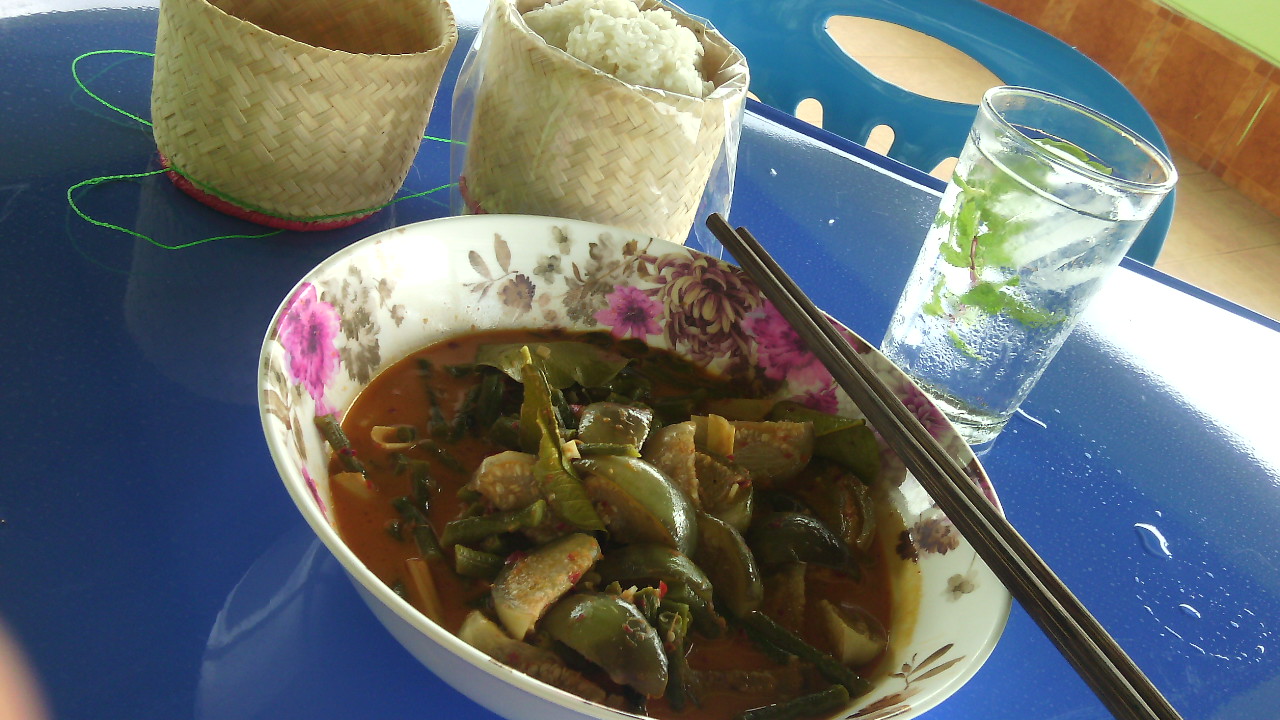
If you expect now some pictures from a cooked frog, I have to disappoint you…smile…here are some shots of vegetarian Lao-Thai-Fusion dishes. Get inspired, create and enjoy your own wonderful homemade Sunday dish!

About the market and padaek

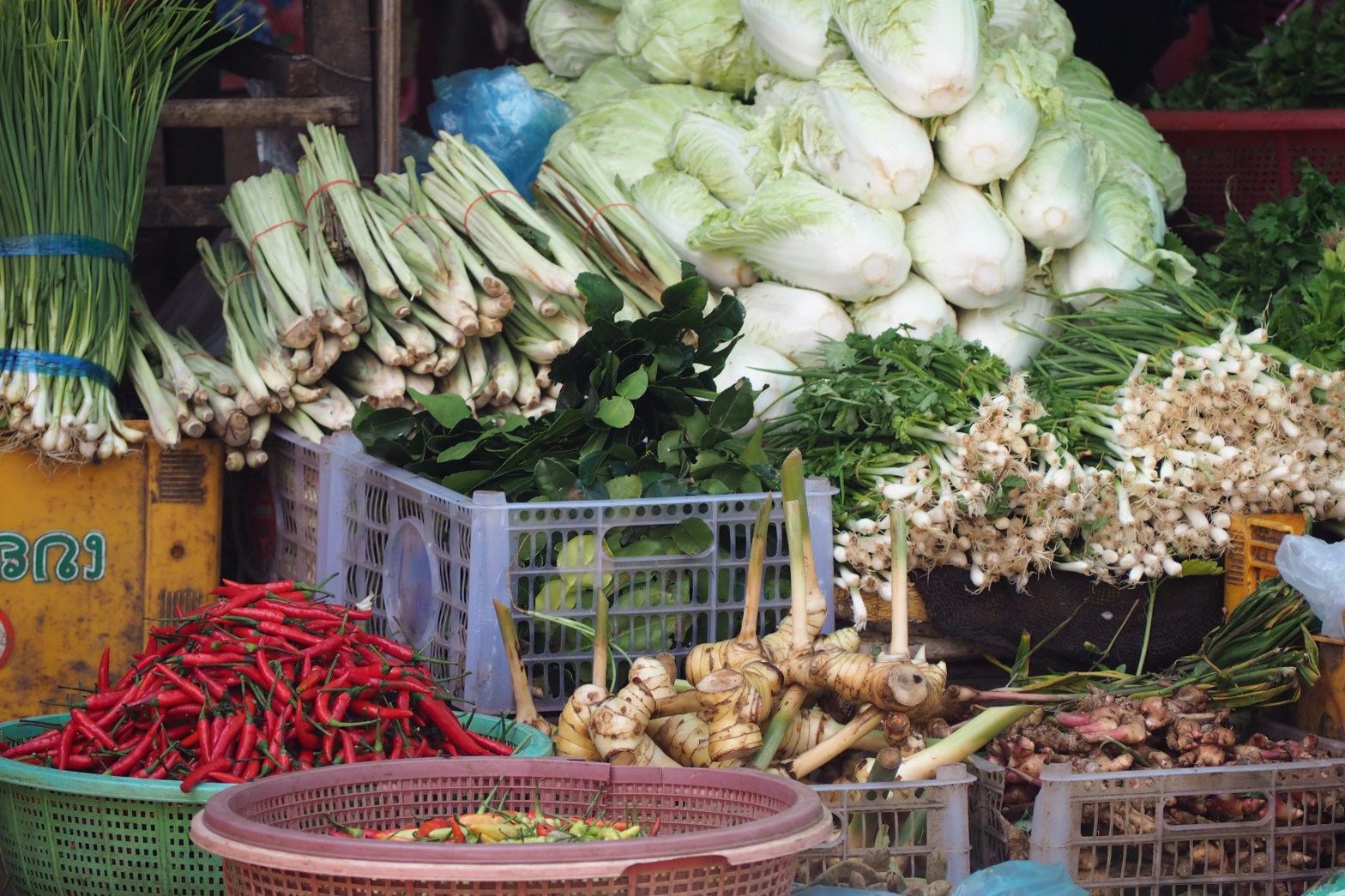
Going to the market is my (almost) daily routine – ok, kind of a routine, as it is every time a new experience – different smells, new herbs, other seasonal fruits or vegetables. It is about discovering with all the senses, continuously. The smell experience from my last Saturday’s market visit was shaped by a self-declared food tourist, the writer of the famous “Ant egg soup”. The famous Padaek – a fermented fish paste – is sold all over the market, fish is fermenting in big buckets. So far, I would try to avoid deep breaths while walking past the paste, since the fish continues to ferment and produces this indescribable mix of smells that suddenly hits your nostrils. But this time it was different. Inspired by the writer, I opened my senses to look at the smell differently, she compared it with a strong smelly French cheese and yes, it comes actually pretty close to it. It also reminded me of the fermented horse milk I used to drink when I was in Mongolia. Isn’t it interesting and fascinating that so diverse nations on the planet have adopted the same process – fermentation – to conserve and transform food!?

Enjoy the impressions from the market!

First of all, the Paedak, the fermented fish used as a base ingredient for many traditional Lao food recipes

Padaek

Colorful experience

About Fish and meat

Flowers and more

I call them “my market ladies”, favorite spot for me to have a small talk and buy all these herbs I don’t really know

The story of the frog

After a few dry and very hot days, rain came in late this afternoon. It started with a few drops falling on the iron roofs – tok tok tok. Slowly but steadily, drops take on a faster rhythm until they hit so strongly on the iron that it swallowed all the other sounds. Waterfalls running down from all the roofs. Blizzard, thunder. A dramatic scene. A few brave people still drive through the streets, most though are looking for a shelter, so do the animals. Except for the frog. While I stand in a shelter, it is dark already, earlier than usually, I observe. There is not much else to be done. Plentiful water is coming from the heaven down to earth – to the pleasure of the frog – hop hop hop. Where are you going? The frog is heading towards the street. I wonder whether it will jump down from the pavement onto the road? Hop. Yes. Be careful, frog. Every now and then a car or a motorbike comes along the street. The frog is in a dangerous situation, I think. When a motorbike driver almost crashes with a car while sidestepping from the frog. That was tight. Within seconds, the same motorbike driver returns, gets off the motorbike, catches the frog with his hands, smiles at me and jumps back on the motorbike with the frog in one hand. Happy catch of the day.

The street was definitely a dangerous adventure for the frog but not for what my first thoughts were. Frogs can be found on the menu and in markets in Laos and make up for a meal…or maybe he was just saved by the motorbike driver, brought to a safer place…only the frog knows how the next part of the story goes…

About the papaya tree

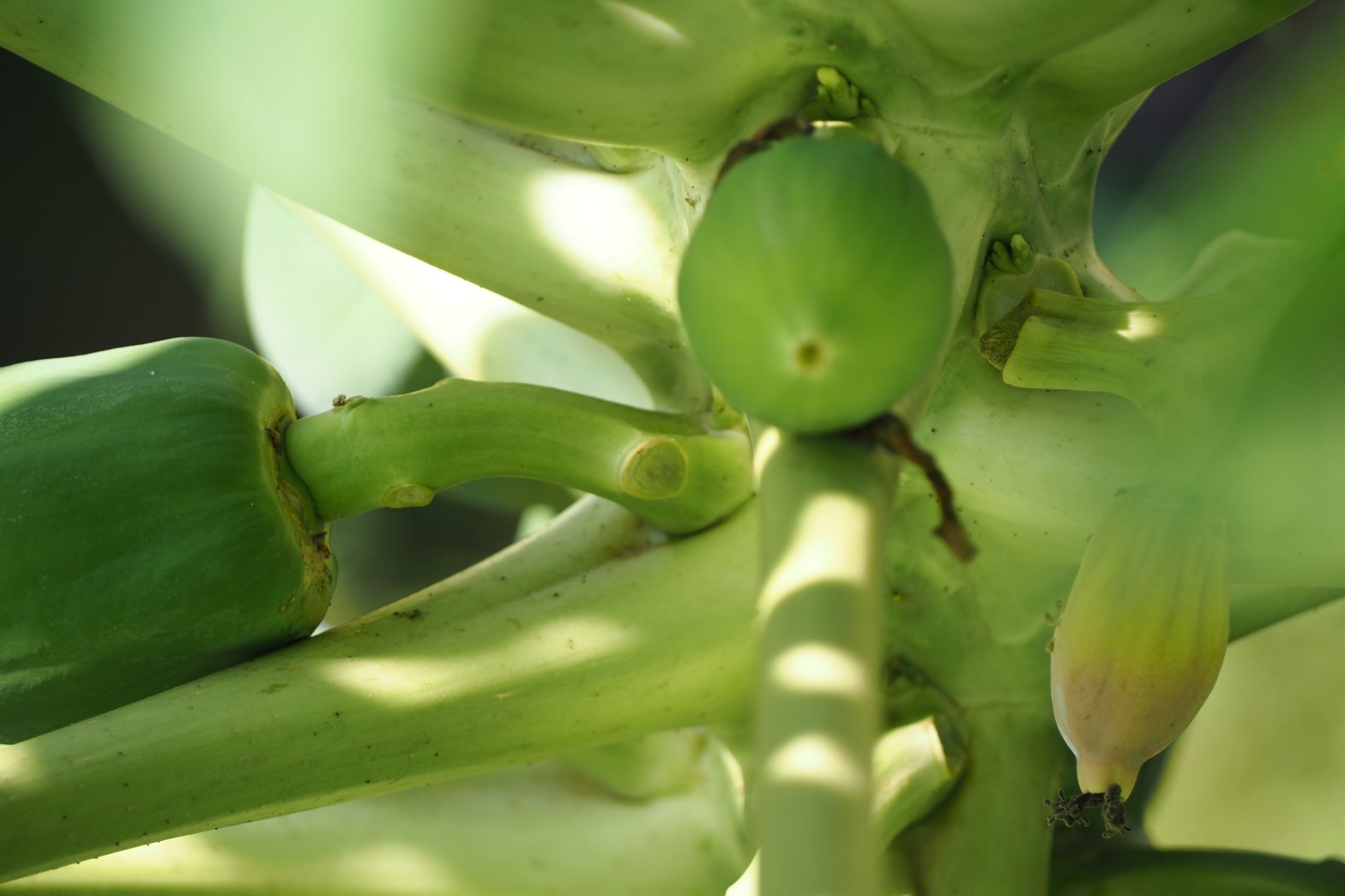
Do you remember the papaya tree in front of my window? It is bearing the first fruits. And it is growing. Growing towards new heights, not far out of reach anymore. Soon I may harvest a fruity breakfast…in case the papayas are not grabbed before for the delicious and spicy papaya salad called “Dam Mak Hung” are known in Thailand as “Som Tam” – a salad of shredded green papaya and a bit of shredded carrots, mixed with garlic, lime juice, fish sauce (or without), tomatoes, peanuts and obviously, a handful of chilies. An adventure for the taste.

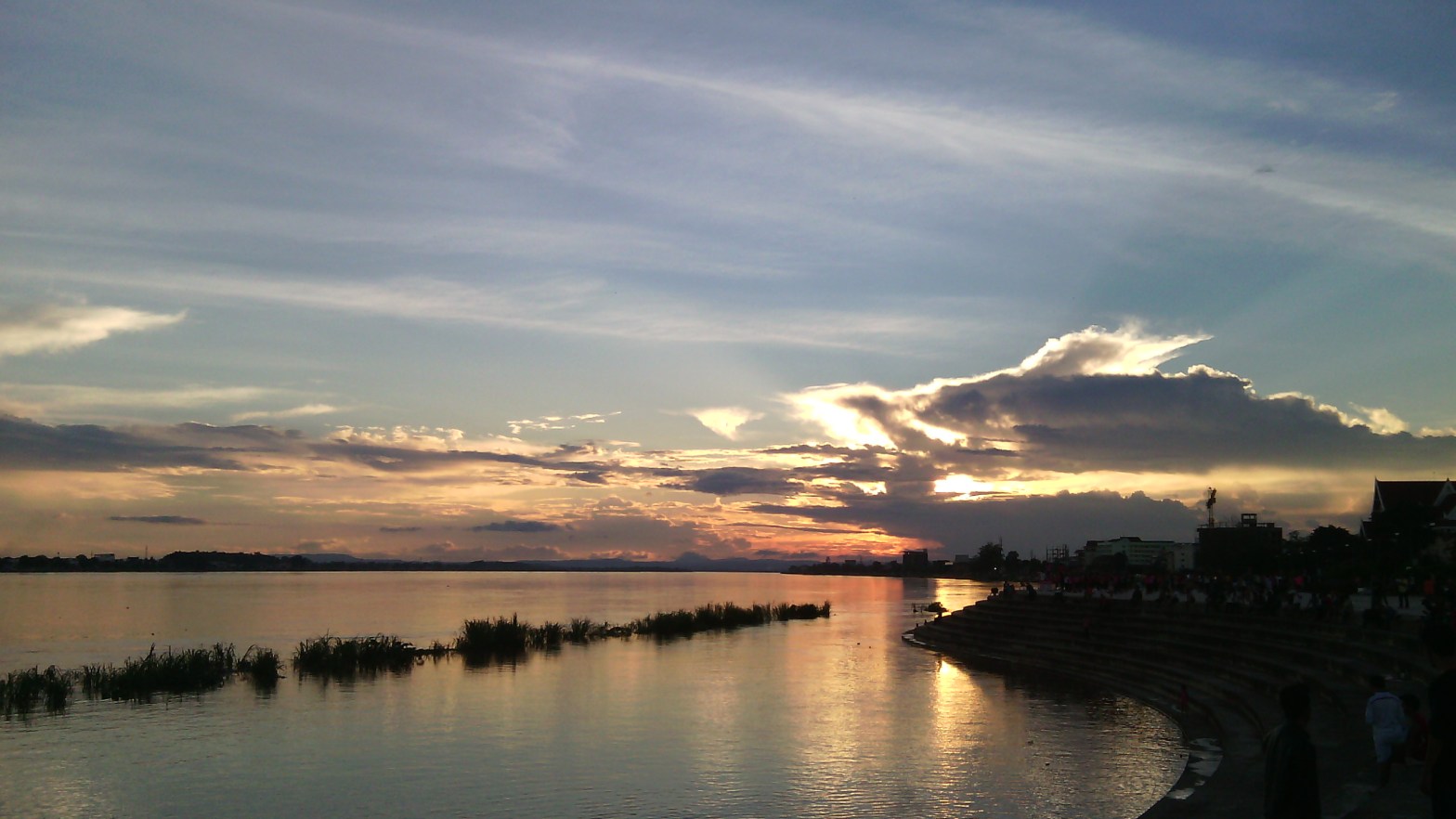
But not only the tree grows, also the mighty Mekong River becomes bigger and bigger. It definitely leaves and impression on me. Regularly I make a small excursion to see how the Mother of Waters, the Mekong, is doing and where it stands. Yesterday, I climbed again up to the Golden Buddha Phou Salao to enjoy the fantastic evening light. On the way back I was blessed with a wonderful sunset from the long Japanese bridge spanning 1,380m over the Mekong.

Enjoy the impressions.

Relaxing days on Koh Mak, Thailand

Quiet days on an empty beach

Koh Mak

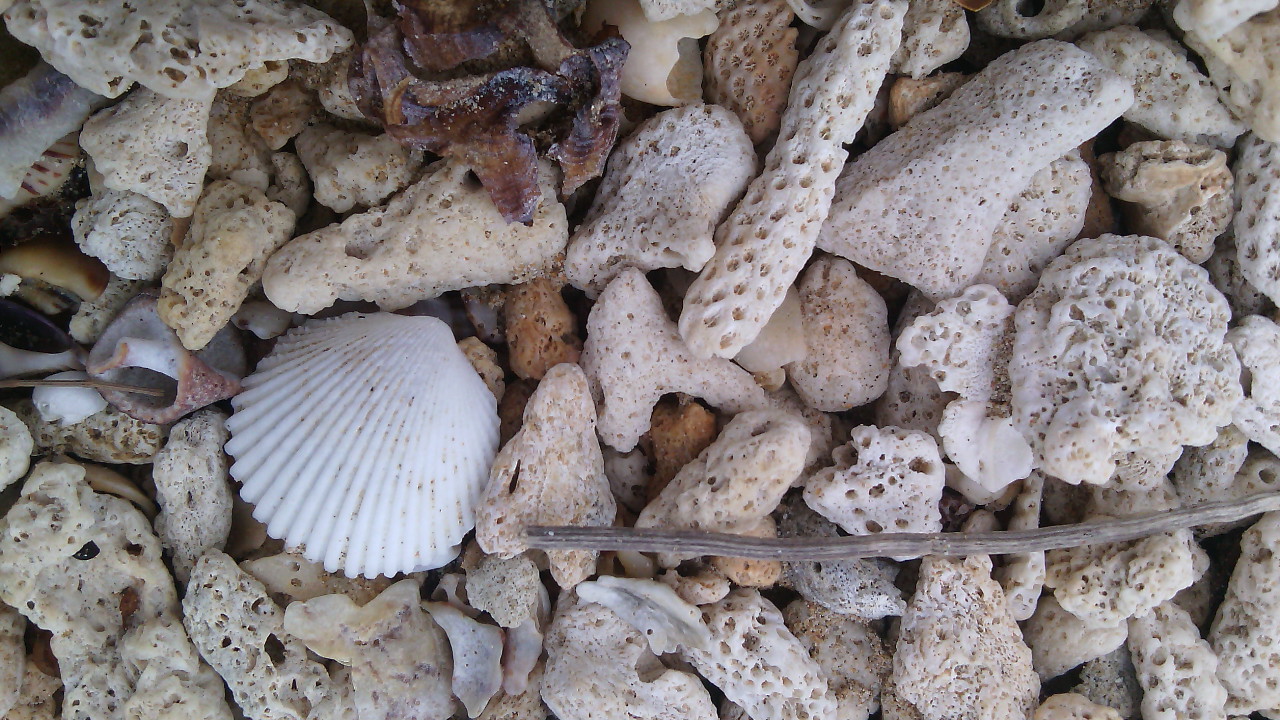
Discovering natural beach arts made by shells and corals

Natural beach arts

Like little treasures along the beach

Natural beach arts 2 Beach treasures

Rainy days in change with sunny days, blooming flowers everywhere

Reading, chatting, eating and relaxing in a beautiful bungalow of the warmly run place called Big easy

wpid-img_20150824_163207.jpg

Walks into the sunset, how wonderful and pleasant those silent moments, filled only with the sound of the ocean and the birds singing

Sunset on Koh Mak

Small change – big impact

After I’ve been learning, practising and enjoying motorbiking for a few months, it was time for a change – time for a bicycle. This choice immediately converted me from one of the many motorbikers in Pakse into one of the few cyclists in town. Unexpectedly, it also gives me every day spontaneous sympathy and smiles from people along the road. The slower pace allows to see each other’s faces, vistas can meet, no helmet separating us. It gives me more time to see things, I can stop quicker, stop at new places. Such as at the small grocery shop I’ve never been to before. An older man welcomes me, the woman is kneeling and preparing a fish at the entrance. It feels a little bit like entering into their house. I am looking for offerings for the monks of the temple I use to go, Vat Luang. Tomorrow early in the morning celebrations will take place, it is the start of the three-months Buddhist lent. While I am buying a few things, we get into a conversation. Though I try to speak my basic Lao at its best, I give in to join on a French conversation. Proud, the man with the grand daughter in his arms, tells me that he speaks five languages and then I discover a small panel that says “Translations – Vietnamese, English, French…” and that he has been here during the revolution, I shall come again to continue our conversation.

Alms for the monks - Vat Luang

Ban Kiet Ngong – Observing life in the wetlands

A woman with the typical straw hut comes my way. Already a few metres before our paths cross, she smiles at me and says “Pai sai?” – Where are you going? “Pai Ban Kiet Ngong – to the village”, I respond. Now we stand on the same altitude, we stop and get into a nice country side small talk. She says “beautiful your sin (skirt)” – “Oh thank you. It’s a Lao sin.” – “Ah, do you wear it in your country?” – “No, rather trousers like yours.” Funny situation…we smile at each other.

She carries a big open plastic pot and now I am curious and ask her where she is going. She is on the way to the wetland to get fish, eels. The strange paste in her box will help her to catch the eel. Later I learn, it is based on crab meat enriched with a few other ingredients. Good bye, good luck!

Back on the veranda of my bungalow, I observe the wetlands and see people on canoes slowly making their way through the grass. Suddenly, a herd of buffaloes comes around, water is splashing, they seemingly enjoy their walk. So do I, a truly wild touch. Later, a young man is walking at the edge of the wetlands with a bag in the hands filling it up step by step fuller – what is it? Snails, he says.

The wetlands, a magical food basket. When I leave the village on the local songthaew, women loads to the bus six big bags full of – let me see – what is it – ah, small mussles. My sustainability heart wonders whether this food basket will always be abundant and eternal…time will tell.